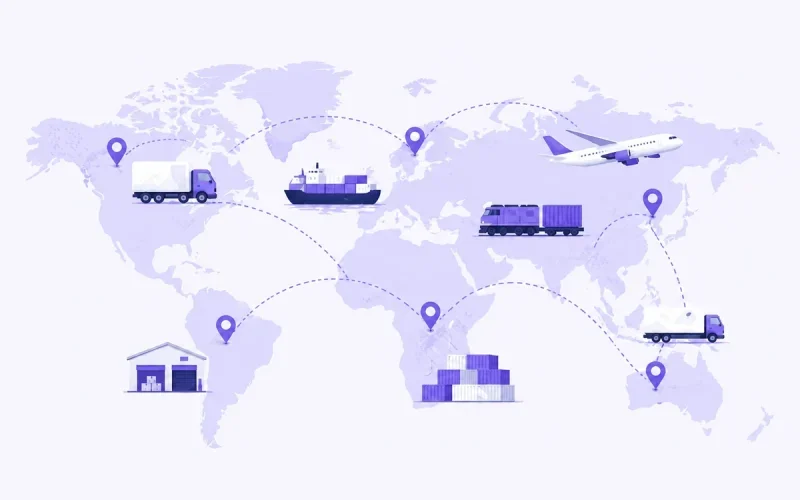
As logistics networks transition from disruption recovery to smarter, faster, and more resilient operations, the prognosis for transportation stocks is receiving greater attention. As important market indicators, traders are keeping an eye on supply chain visibility, fuel prices, automation, and freight demand.
Because transportation industries are located near actual economic activity, this sector is important. Investors frequently interpret improvements in freight volumes, warehouse modernization, and delivery dependability as indicators of improved business circumstances.
These are the factors that are now influencing the logistics and transportation industry!
Why Economic Momentum Is Reflected in Transportation Stocks
Because items must travel before revenue is completely realized, transportation stocks are sometimes seen as useful indicators of business activity. Traders using the Insipix stock trading platform are increasingly monitoring freight activity and logistics efficiency as signals of broader economic momentum.
Recent supply chain trends indicate that businesses are putting dependability ahead of performance at the lowest possible cost. With real-time visibility, this helps logistics operators provide improved routing, tracking, warehouse coordination, and delivery performance.
In transport markets, traders typically keep a close eye on these signals:
- Variations in freight volume between rail and trucking
- Fulfillment speed and warehouse throughput
- Labor availability and fuel prices
- Upgrades for analysts are linked to improvements in supply and demand
Although it can boost morale, a better logistics environment does not ensure a straight increase in share prices. Traders frequently reevaluate the group’s earnings potential when businesses exhibit pricing discipline and improved network efficiency.
Digitalization of the Supply Chain Enhances Logistics Performance
Instead of being a premium option, digitalization is becoming a standard capability. To cut down on delays and manual exclusions, businesses are integrating order status, transportation updates, supplier performance, and inventory positions into shared platforms.
Better data can enhance asset utilization and service dependability, which is important for transportation firms. When demand changes or a disruption occurs, carriers and shippers can react more quickly thanks to cloud platforms, API connections, and control towers.
The primary digital improvements are altering day-to-day operations in a number of ways:
- Integrated tracking of shipments across modes of transportation
- Quicker exception routing in the event of delays
- Partners’ shared inventory views
- Improved information for route planning and carrier selection
Over time, these enhancements can support higher profits by lowering friction throughout the logistical chain. Digital execution is crucial for traders since it demonstrates a transport company’s ability to compete in the face of customer demands for quicker, cleaner service.
Note: Businesses with more robust data systems might be able to manage volatility more effectively than their peers that depend on manual procedures.
Technology Trends Reshaping Transport And Warehousing
Large stores and multinational manufacturers are no longer the only ones using technology. As businesses want for quicker choices and more stringent cost management, artificial intelligence, IoT sensors, digital twins, and warehouse robotics are expanding into wider supply chain activities.
AI is enhancing network planning, dynamic routing, and demand forecasting. IoT sensors assist lower claims, spoilage, and missed delivery windows by enabling real-time tracking of temperature, location, humidity, shock, and equipment health.
This table illustrates the relationship between supply chain technology and the performance of the transportation market:
| Trend | Main Use Case | Transport Impact | Cost Impact | Trader Signal | Australia Link |
| AI Forecasting | Demand Planning | Better Capacity Matching | Lower Expedite Costs | Margin Stability | Retail And Import Flows |
| IoT Sensors | Shipment Monitoring | Fewer Damaged Loads | Lower Claims | Service Quality | Cold Chain Logistics |
| Digital Twins | Scenario Testing | Faster Disruption Planning | Lower Network Risk | Resilience Premium | Port And Mining Routes |
| Warehouse Robotics | Picking And Packing | Faster Fulfillment | Labor Efficiency | Throughput Growth | Distribution Centres |
| Blockchain | Traceability | Cleaner Chain-Of-Custody | Lower Compliance Friction | Audit Readiness | Food And Pharma Exports |
| Last-Mile Optimization | Route Efficiency | Better Delivery Reliability | Lower Stop Costs | Customer Retention | Urban Delivery Networks |
Performance can be enhanced by technology, but it also costs money. Traders should assess if their expenditures result in quantifiable improvements in customer retention, inventory control, cycle times, and delivery accuracy.
Last-Mile Costs Remain A Key Pressure Point
One of the most costly aspects of logistics is still last-mile delivery. Route optimization and delivery density are crucial for profitability because industry data indicates that they can cover over half of shipping expenses.
Margin pressure comes from fewer delivery windows, insurance costs, urban congestion, and fuel volatility. In response, businesses are offering better delivery times, pickup choices, dynamic routing, and the selective deployment of drones or self-driving cars.
Operators are attempting to manage last-mile pressure in the following ways:
- Routing with AI to cut down on miles per stop
- Improved delivery windows to reduce unsuccessful drops
- Options for pickup and collection in crowded regions
- Automation to lower the cost of manual handling
Last-mile performance is more than just an operational element for transportation equities. While effective delivery networks can safeguard margins in competitive marketplaces, poor delivery experiences can harm customer retention.
Warning: If operators are unable to increase route efficiency, gains from increased freight demand may be countered by rising last-mile costs.
Valuation of the Resilience and Sustainability Change Sector
Resilience-first planning is replacing cost-only thinking in supply chains. Similar pressures linked to fuel costs and macro uncertainty can also be observed in energy stocks volatility, where shifting commodity prices continue influencing operational margins and investor sentiment.
Logistics companies that handle more intricate transportation patterns may profit from this shift. However, as businesses create redundancies, qualify additional suppliers, and reorganize networks around risk control, it may also result in higher prices.
For investors in transportation, several resilience trends are becoming increasingly significant:
- Using multiple sources to lessen reliance on a particular area
- Using nearshoring to reduce lead times
- Monitoring emissions in different transportation lanes
- Circular logistics for recycling and returns
Due to the market’s connections to commodities, ports, imports, and long-distance freight, these changes are particularly significant for Australian traders. Fuel prices, trade flows, warehousing demand, and resource–sector transport activity can all have an impact on ASX logistics names.
Note: Although resilience can increase service dependability, if costs are not carefully controlled, it may lower profitability.
How to Monitor Transportation Stocks More Efficiently
A balanced interpretation of both macro and company-level data is necessary for transportation stocks. Many traders are also watching how broader Fed policy volatility may influence freight demand, borrowing conditions, and transportation sector performance in the months ahead.
Combining market data with supply chain indicators is a useful strategy. Before making judgments based on a single headline move, traders should examine volume trends, pricing power, carrier utilization, and management commentary.
Review transport and logistics names using this straightforward framework:
- First, look at shipment patterns and freight volumes.
- Compare pricing power to fuel costs.
- Observe updates on warehouse automation and throughput.
- Examine the labor and maintenance pressure guidelines.
This procedure aids in distinguishing between real operational improvement and transient optimism. Additionally, it prevents overreacting to analyst upgrades in situations where the underlying cost environment is still unclear or inconsistent among transportation subsectors.
Wrapping Up
As supply chain networks grow more digital, transparent, automated, and robust, the outlook for transportation stocks is improving. In a turbulent operating environment, these tendencies can help logistics organizations maintain cost control while providing dependable service.
Selectivity is crucial for traders. The forecast for transportation equities is still dependent on the strength of the real economy, but the top performers are probably those businesses that turn supply chain innovation into quantifiable efficiency and long-term profits.