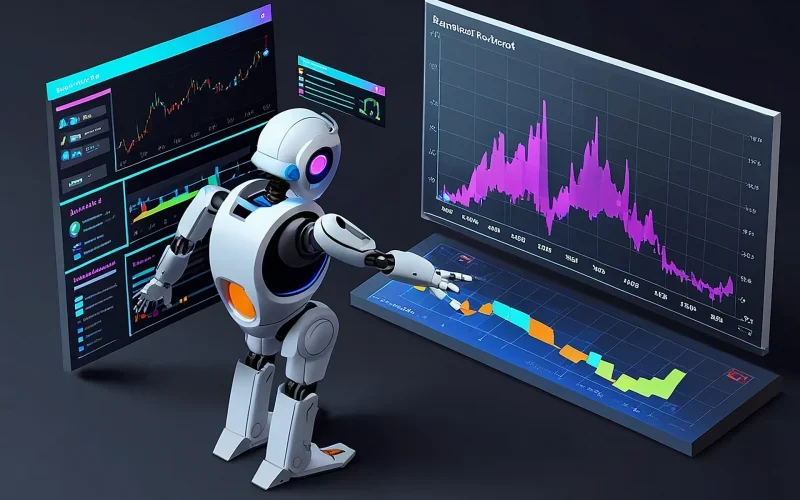
Financial markets move faster today than ever before. Prices shift in milliseconds, and traders compete in a landscape where speed and data dominate. At the center of this evolution is artificial intelligence (AI). What was once the domain of human intuition is increasingly handled by algorithms capable of analyzing millions of data points in real time.
AI has reshaped the way trading works. From hedge funds running high-frequency strategies to retail traders using automated bots, algorithms are now deeply embedded in markets. For traders, understanding AI and trading is no longer optional — it’s essential.
Keep reading to discover more!
Why AI Matters in Trading
The strength of AI lies in its ability to process vast amounts of information faster than humans can. It detects patterns invisible to the eye, adapts to new data instantly, and executes trades without hesitation.The strength of AI lies in its ability to process vast amounts of information faster than humans can. Companies connected to the growth of AI stocks NVIDIA continue to play a major role in expanding the infrastructure behind algorithmic trading, data centers, and machine learning systems used throughout modern financial markets.
Benefits of AI in trading include:
- Ultra-fast execution with minimal delays
- Real-time analysis of global markets
- Pattern recognition beyond human capability
- Reduced the influence of human emotion
In short, AI improves both efficiency and objectivity, giving traders a competitive edge.
Key Uses of AI in Modern Trading
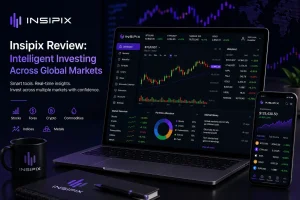
AI applications in trading vary widely, from simple bots to complex predictive systems. Many traders exploring Insipix algorithmic trading tools now rely on automated systems for market scanning, execution speed, and risk management across currencies, stocks, commodities, and digital assets.
Most common uses include:
- Algorithmic trading: Automated execution of buy/sell orders
- High-frequency trading (HFT): Leveraging microsecond speed advantages
- Predictive analytics: Using machine learning to forecast price trends
- Sentiment analysis: Processing news and social media to gauge market mood
- Risk management systems: Automatically adjusting exposure levels
Each of these uses makes trading more data-driven and less dependent on guesswork.
The Role of Algorithms vs. Human Traders
AI doesn’t replace human traders entirely — it complements them. Humans still provide judgment, creativity, and adaptability, while algorithms handle speed and volume.
Comparison of strengths:
| Factor | Algorithms | Human Traders |
| Speed | Milliseconds | Slower, manual execution |
| Pattern Recognition | Across millions of data points | Limited capacity |
| Adaptability | Learns with training data | Intuitive, flexible |
| Emotion | None | Influenced by fear/greed |
The best results often come from combining algorithmic tools with human oversight.
Risks and Challenges of AI in Trading
While AI is powerful, it is not foolproof. Highly volatile environments, such as crypto volatility trading, can create sudden market conditions where algorithms react too aggressively or fail to adapt quickly enough to unexpected price swings and liquidity changes.
Main challenges include:
- Flash crashes caused by runaway algorithms
- Overfitting models that fail in new conditions
- Black-box systems that lack transparency
- Dependence on data quality and infrastructure
AI amplifies both strengths and weaknesses, which is why oversight remains critical.
How Traders Can Use AI Effectively
For retail traders, AI doesn’t have to mean building complex systems. Many platforms offer AI-driven tools accessible to individuals.
Ways traders can leverage AI today:
- Use bots to automate repetitive tasks
- Apply AI-powered screeners for trade ideas
- Analyze sentiment data from news and social media
- Combine technical setups with algorithmic alerts
The key is to let AI enhance decision-making, not completely replace it.
The Future of AI in Trading
The role of AI will only expand. Advances in machine learning, natural language processing, and quantum computing will further increase algorithmic capabilities. Regulators are also beginning to focus more on the use of AI in markets, which may shape future developments.
Expected future trends:
- Greater adoption of AI among retail traders
- Stricter oversight to prevent systemic risks
- Hybrid models where AI supports human judgment
- Expansion into emerging markets and new asset classes
AI is not just a temporary trend — it’s the new foundation of trading infrastructure.
Conclusion
AI has transformed trading by making it faster, smarter, and more data-driven. From algorithms that execute in milliseconds to predictive systems that learn from vast datasets, AI provides tools that give traders a significant advantage. But technology alone isn’t enough — success comes from combining human judgment with algorithmic power. For the traders who adapt, AI isn’t a threat; it’s an opportunity.