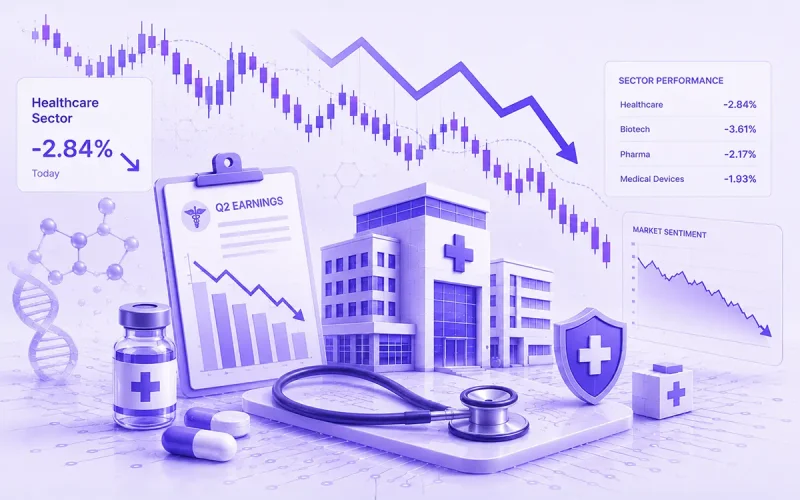
The future for healthcare equities has become more apparent as recent earnings reports reveal stable fundamentals but lower stock price movements. Investors are starting to wonder if defensive industries can continue to deliver consistent results in shifting market conditions.
Businesses like HCA Healthcare produced outcomes that were in line with expectations, but they were unable to create significant growth momentum. This points to a more significant change in the current climate, when fulfilling estimates is no longer adequate to justify valuations.
Let’s learn more about the main elements influencing market sentiment in the healthcare industry!
Stability of Earnings Compared to Market Expectations
The healthcare industry’s image for steadiness has been strengthened by recent earnings reports that have mostly fulfilled consensus forecasts. Traders active in Insipix stock market trading are increasingly noticing that stability alone is no longer enough to generate strong momentum in defensive sectors.
The shift in investor attitude towards growth and forward-looking drivers is reflected in this divergence. Even impressive profits are being reevaluated in light of anticipated future growth and margin sustainability.
The primary earnings-driven trends that traders are monitoring are as follows:
- Although revenue growth is consistent, there are no positive surprises.
- Profit margins are steady but not substantially growing.
- Consistency in earnings is priced in for big healthcare companies.
- Future growth drivers are now the focus of the market.
These patterns suggest that the typical defensive appeal of healthcare equities is no longer sufficient to support them. When assessing chances inside the sector, traders are becoming more picky.
Note: When growth catalysts are scarce, meeting expectations might not sustain price increases.
Changes in Regulation and Their Effect on the Market
The U.S. government’s decision to categorise marijuana under federal law is one of the most important recent changes affecting the future for healthcare stocks. Expectations for certain aspects of the larger healthcare and pharmaceutical environment are starting to change as a result of this legislative change.
Cannabis-related businesses may benefit financially and operationally from the reclassification from Schedule I to Schedule III. It also emphasises how regulatory modifications can serve as potent accelerators in many healthcare subsectors.
The following are some ways that market dynamics are being impacted by regulatory changes:
- Lower tax obligations for businesses involved in cannabis
- Better chances for finance and capital access
- Possible growth in medical applications and demand
- A rise in investor interest in developing healthcare markets
Related stocks are already seeing volatility as a result of these changes, especially for companies like Tilray and Canopy Growth Corporation. Expectations regarding future policy developments are a major factor driving short-term price changes.
Be aware that even before fundamentals fully adjust, regulatory changes may cause significant price swings.
Comparing Sectors and Trends in Performance
These days, healthcare companies face competition from other industries with more compelling growth stories or obvious catalysts. Similar patterns of uncertainty can also be seen in financial stocks volatility, where macroeconomic pressure continues influencing sector rotation and investor positioning.
In the medium term, the healthcare industry seems less dynamic than the technology or energy industries. This is especially clear when examining trends in sector rotation and capital flows.
A comparative summary of important sector attributes is provided below:
| Sector | Earnings Stability | Growth Potential | Volatility Level | Key Drivers | Market Sentiment |
| Healthcare | High | Moderate | Low to Medium | Earnings, regulation | Neutral |
| Technology | Medium | High | High | Innovation, AI trends | Positive |
| Energy | Medium | Medium | High | Oil prices, geopolitics | Positive |
| Consumer | Low to Medium | Medium | Medium | Spending trends | Mixed |
| Cannabis | Low | High | Very High | Regulation, sentiment | Speculative |
This table illustrates why, in contrast to more dynamic industries, the healthcare industry may find it difficult to draw in short-term funding. Sectors with greater momentum and more obvious catalysts are frequently given priority by traders.
Advice: Sector rotation can change rapidly, particularly when macroeconomic conditions prioritise growth over stability.
The Current Approach of Traders to Healthcare Stocks
The outlook for healthcare equities indicates that traders should modify their approaches when working with defensive industries. Many investors using Insipix online investing tools are also paying closer attention to sector psychology, momentum shifts, and the broader psychology of trading when evaluating healthcare exposure.
Rather, traders are concentrating on relative performance metrics, sub-sector advancements, and particular catalysts. This method aids in locating opportunities in a larger industry that can seem to be static.
Here are some useful strategies that traders are employing:
- Keeping an eye on policy and regulatory developments
- Finding subsectors with room to expand, like biotech or cannabis
- Evaluating relative performance in relation to more general indices
- Keeping an eye out for guidance updates and earnings adjustments
These techniques enable traders to navigate a sector that is changing in response to outside stimuli while maintaining their selectivity. When conventional patterns start to change, adaptability is crucial.
Notice: In dynamic market settings, relying only on protective traits may result in lost chances.
The Global Market Context and Healthcare Stocks
The future for healthcare stocks is also being impacted by global changes, especially as various areas react to economic and regulatory challenges. This is important for traders in markets like Australia, where the healthcare industry is still very important.
Growth and profitability may be impacted by the need for businesses operating in international markets to adjust to different regulatory regimes. For traders following global patterns, this presents both opportunities and threats.
Another level of complication is introduced by the interplay between changes in U.S. policy and international healthcare markets. Comprehending these relationships can aid traders in predicting changes in sentiment and capital flows.
Note: Long-term sector performance can be greatly impacted by global regulatory harmonisation.
Wrapping Up
As steady results meet changing market expectations and fresh regulatory catalysts, the picture for healthcare companies keeps changing. Price movements indicate that investors are expecting more than consistency, even though the industry is still fundamentally sound.
The rise of policy-driven possibilities emphasises the value of flexibility in contemporary trading situations, especially in sectors like cannabis. Traders are better equipped to handle these shifts if they concentrate on sector dynamics and catalysts.